
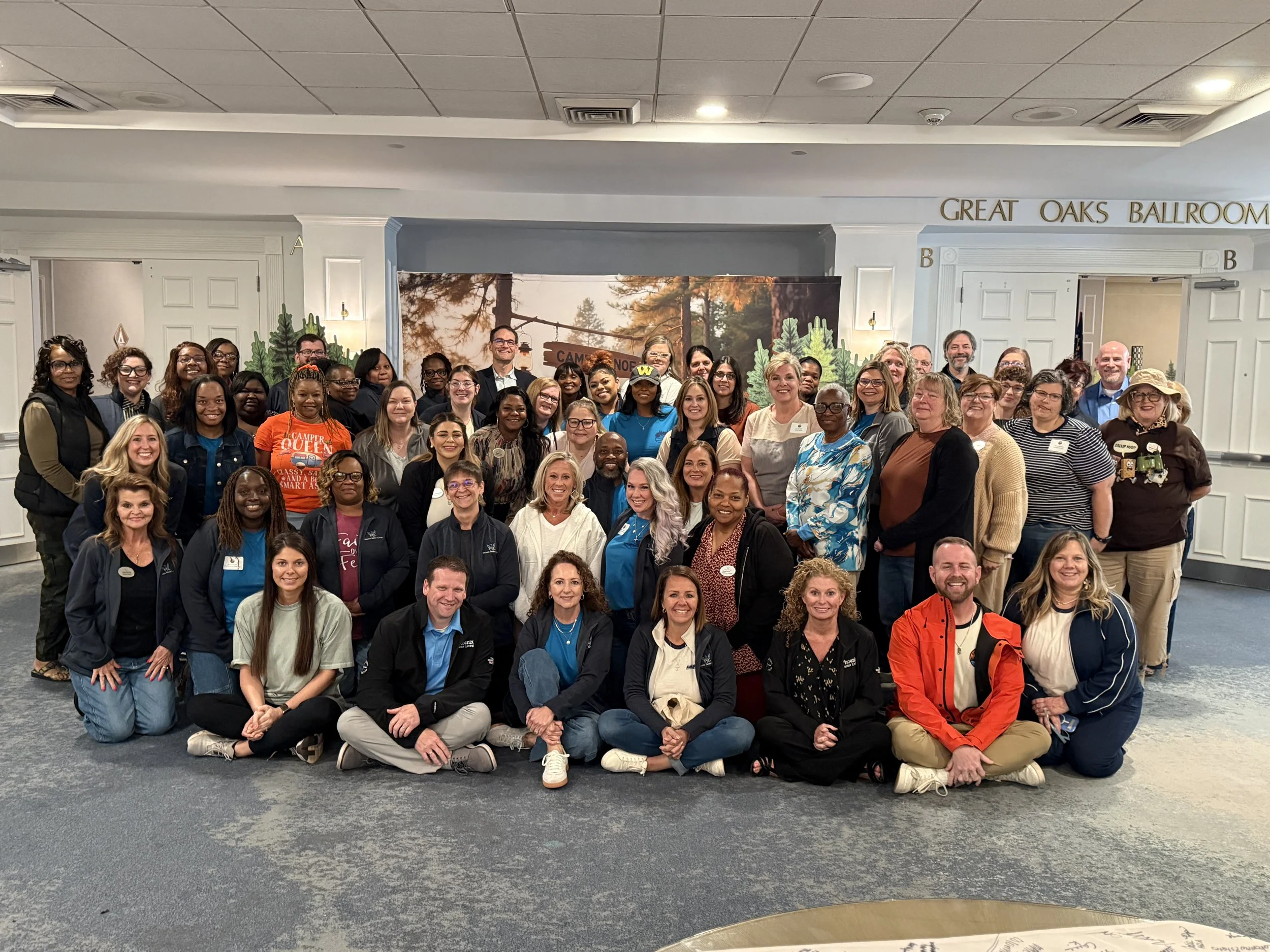
While working with clinical leaders and Wellness Directors from Phoenix Senior Living, a phrase surfaced that I couldn't stop thinking about: One Team. One Canoe.
The phrase wasn't mine. It came from their world and culture, but it captured a leadership challenge I've seen in organizations across almost every industry.
Different departments naturally experience the organization from different seats. Sales has goals and pressures. Operations has its own. Clinical Care sees things through another lens. Each group has responsibilities, expertise, and priorities that legitimately matter.
Problems begin when people become so focused on their seat that they forget they're sitting in the same canoe.
If one person is paddling north, another is paddling south, and somebody else has decided their primary responsibility is pointing out that everyone else is paddling incorrectly, the canoe isn't going to make much progress.
Organizations aren't that different. Silos rarely begin because people don't care about the organization. In many cases, they begin because people care deeply about their part of it.
My customers. My department. My deadline. My people. My number. My problem.
Over time, my can quietly become more important than our.
That's why collaboration requires more than telling people to “work together.” Leaders have to continually reconnect people to the outcome everyone shares.
What are we ultimately trying to accomplish? Who depends on us to accomplish it? Where are our priorities competing unnecessarily? What information does another team need from us? Where might we be making someone else's job harder without even realizing it?
One of my favorite questions is what happens when something goes wrong. Do we immediately start trying to solve the problem together, or do we spend our energy proving whose fault it was?
In Lead on 3, I teach One Team because collaboration isn't simply about being friendly across departments. It's the ability to think beyond the boundaries of your own role and recognize how your work affects everyone else's.
That doesn't mean everyone should think the same way. Healthy teams disagree, and different functions should bring different perspectives. Clinical Care should notice things Sales might miss, just as Operations will see realities that other groups don't.
The goal isn't sameness. It's alignment.
A good canoe needs people contributing in different ways. Everyone doesn't have to hold the same paddle, sit in the same seat, or see the water from the same angle.
They do need to understand where they're trying to go.
When pressure rises inside an organization, pay attention to the language people use. Are we talking about them, or are we talking about us? Are we primarily protecting our own part of the organization, or are we helping the whole organization move?
Different seats. Different responsibilities. Different perspectives.
One Team. One Canoe.
